Good infrastructure work should leave a trail.
Not just a ticket that says “fixed,” and not just a server that happens to be working today. The useful trail is the one a younger engineer can follow later: what changed, why it changed, how it was validated, and what should happen next.
That is the core Auzietek pattern.
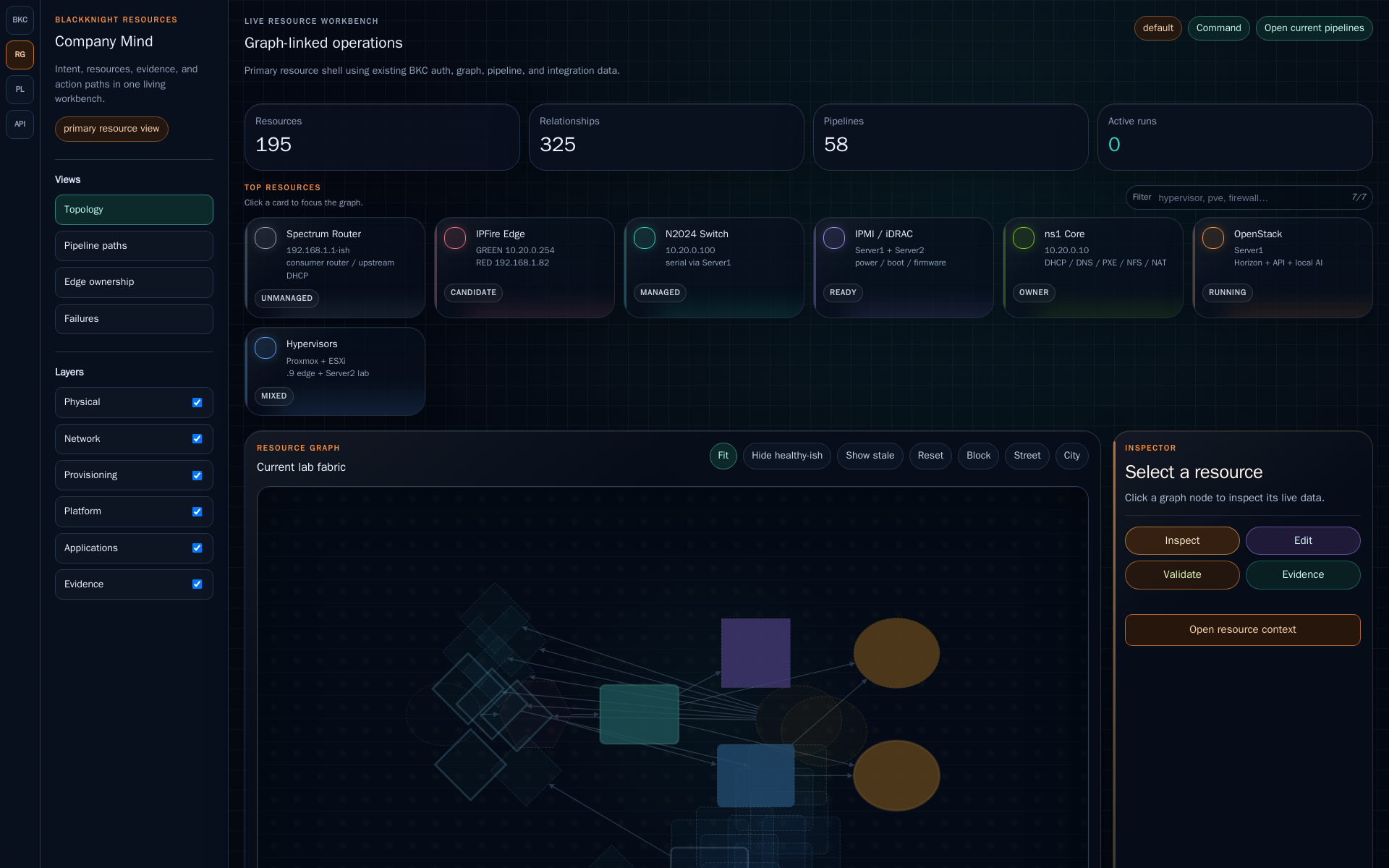
The screenshot above is not a mockup. It is a generated capture from the lab BlackKnightController instance: current resources, relationships, pipeline counts, and graph-linked operations in one living workbench. This is the kind of evidence Auzietek wants to leave behind: visual enough for a stakeholder, specific enough for an engineer, and repeatable enough to regenerate when the environment changes.
We use real lab systems, real deployment pressure, and real operational constraints to build automation that can be repeated. A script is useful. A pipeline is better. A pipeline with evidence, validation, and a clean rollback story is where infrastructure starts to feel less like a pet and more like an asset.
What this means for clients
Auzietek is a fit when the work involves:
- Linux, virtualization, containers, and network edge services;
- rebuilding or modernizing small infrastructure environments;
- turning manual operations into repeatable pipelines;
- documenting systems so the next engineer can understand them;
- using AI carefully as an accelerator, not as a replacement for evidence.
The goal is not to make every environment exotic. The goal is to make the important parts understandable, rebuildable, and supportable.
What this means for engineers
If you are learning systems work, pay attention to the pattern:
- observe the current state;
- make one bounded change;
- validate the result;
- write down the reusable fragment;
- automate only after the fragment has proven itself.
That rhythm is slower than guessing and faster than repeatedly fixing the same thing from scratch.